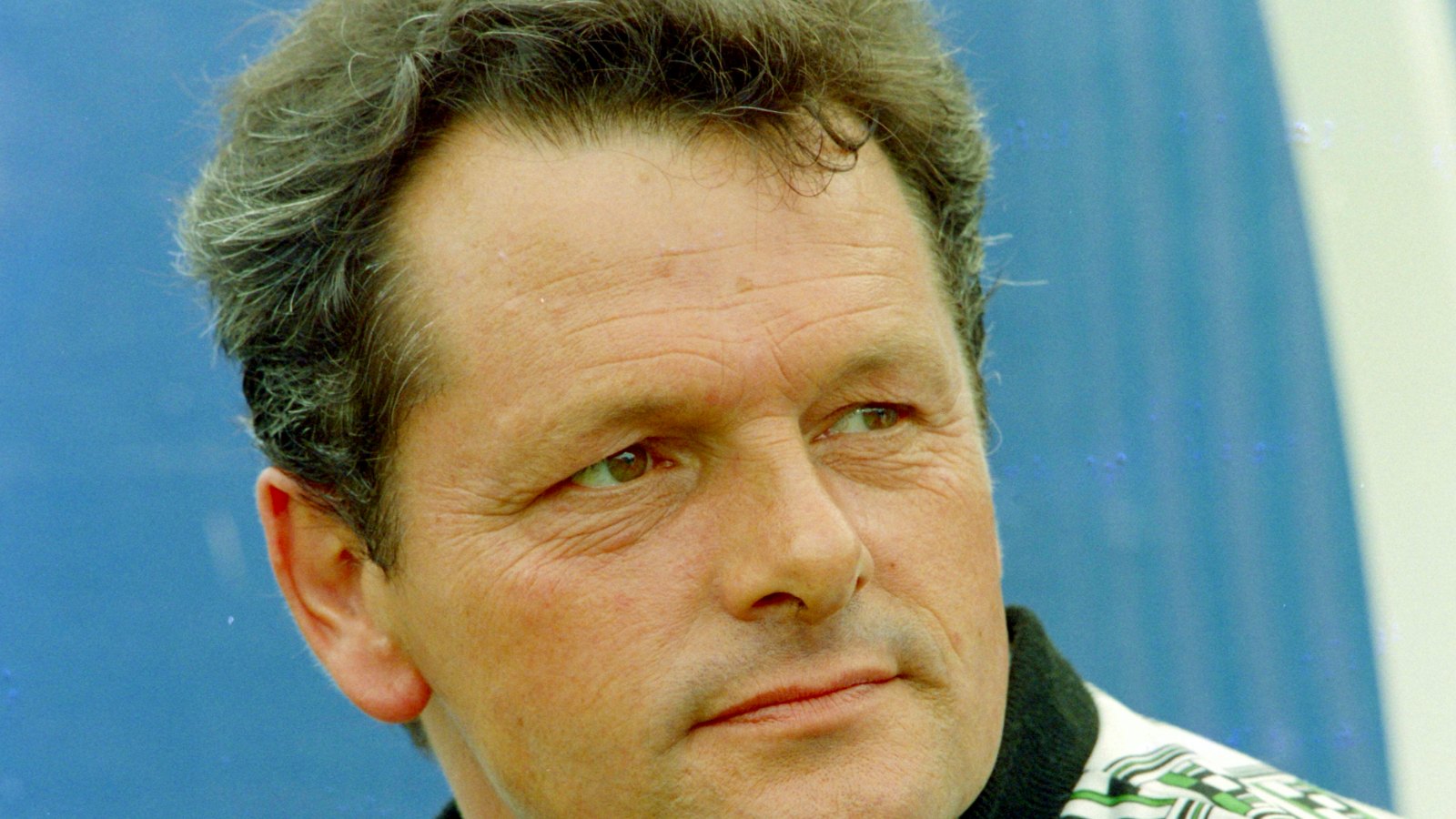
Three minutes into the 1994 Africa Cup of Nations final in Tunisia, Ilyas Litana headed Zambia ahead. Emmanuel Amunike equalized two minutes later. He scored again immediately after the break and on 10 April 1994, Nigeria won their second continental title, the first away. Clemens Westerhof sat on the bench.
| Clemens Westerhof | At a glance |
|---|---|
| was born | 3 May 1940, Beek, Netherlands |
| Nigerian term | 1989-1994 years |
| AFCON record | Second in 1990, third in 1992, champion in 1994 |
| World Cup | USA 94: Group D winners, last 16 |
| The top of the FIFA ranking | April 5, 1994 |
| Before Nigeria | Vitesse, MVV, Feyenoord (assistant) |
| After Nigeria | Zimbabwe, Mamelodi Sundowns, Bush Bucks |
A five-year project
CV was thin. Westerhof had managed Vitesse Arnhem and MVV and worked as an assistant at Feyenoord, but he arrived in 1989 without a trophy to his name as a manager, losing his first official game, a World Cup qualifier away to Cameroon.
Daniel Amokachi gets it all out there. “The success of 1994 actually started in 1989 when Clemens Westerhof took charge of the Nigerian national team,” he said. The coach, he recalled, promised the first World Cup and Cup of Nations.
It came step by step. In the 1990 final, Nigeria lost 1-0 to hosts Algeria. Two years later in Senegal, Ghana defeated them in the semi-finals and they won the bronze medal. It was progress, but the Westerhof players were still aiming for their first World Cup. Then the leap. A 1-1 draw in Algeria decided a three-team final qualifying group with Ivory Coast and Algeria, with Nigeria advancing to the World Cup for the first time on goal difference.
No Eagles coach has stood on all three steps of the AFCON podium.
Discipline and friction
Augustine Eguavoen, who captained the Tunisian final, remembers the structure. “Under his leadership, we had five captains, a senior captain and four assistant captains in the national team,” he told ThisDay in 2016. “All of us who passed through Westerhof tried to emulate his management style.”
Westerhof himself practiced it. “I sat all night so that no player ran away. I did it because I wanted to win,” he said.
Harmony was another matter.
Rashidi Yekini never hid that the relationship was cold. The choice was obvious: In 1993, Golden Eagles coach Fanny Amun says several of his world champions agreed to go to America, and GoalBall sheds light on why Kanu, Babayaro and Taribo were left out. Even Amunike spent most of the Tunisian tournament on the bench before his chance finally came against Zambia, according to Vanguard. Voetbal International later reported that he had an argument with older players over wives at the team’s hotel ahead of the Italy game.
US 94
The team of the 1994 world championship opened with a 3:0 victory over Bulgaria. Argentina won 2-1 after Samson Siasia scored the first goal. A 2-0 win over Greece lifted Nigeria to the top of Group D.
Italy waited. Amunike scored in the 26th minute, Gianfranco Zola was sent off and the Eagles were about 90 seconds into the quarter-finals when Roberto Baggio equalized and won with a penalty in extra time. Westerhof’s replacements were singled out at home and in the Dutch press.
He soon left.
The rating told the story. Nigeria had risen to fifth place in April 1994, still the Super Eagles’ highest position. “We played the cleanest football in 1994 and people still remember that,” Amokachi said.
After Nigeria
Quieter years have come.
He coached Zimbabwe from 1998-2000, had a spell at Mamelodi Sundowns, worked as technical director at Harare and received the Bush Bucks in 2004. In 2005, he refused to return to the Eagles.
His bond with his players continued, and so did the respect. Eguavoen ranked him as Nigeria’s most successful manager, followed by Keshi. When his former captain Stephen Keshi led Nigeria to Brazil in 2014, Westerhof told Vanguard: “It is an honor for me to have the former captain now as the coach of the national team.” He also asked about the gap in numbers, saying that during his time there were 10 or 12 Nigerians playing abroad, while by 2014 “they were in the hundreds”.
The state was slower. In May 2019, the then Minister of Works and Housing, Babatunde Fashola, gave him the title deeds of his apartment in Gwagwala, which he had been promised 25 years ago. “Unfortunately, this is a promise that has cost us a lot of time,” Fashola said. Westerhof replied that now “I can feel more Nigerian”.
Our vision
Westerhof, who turned 86 in May, lives in Arnhem. Vanguard on Saturday reported that he was critically ill at Rijnstate Hospital after being diagnosed with colon cancer, his wife Lilian said she “wanted to live” and asked for prayers.
Every coach since has been measured against him. The final, the bronze, the title and five years later a World Cup play-off is a standard no successor has met.
This article was last revised and updated 21 seconds ago