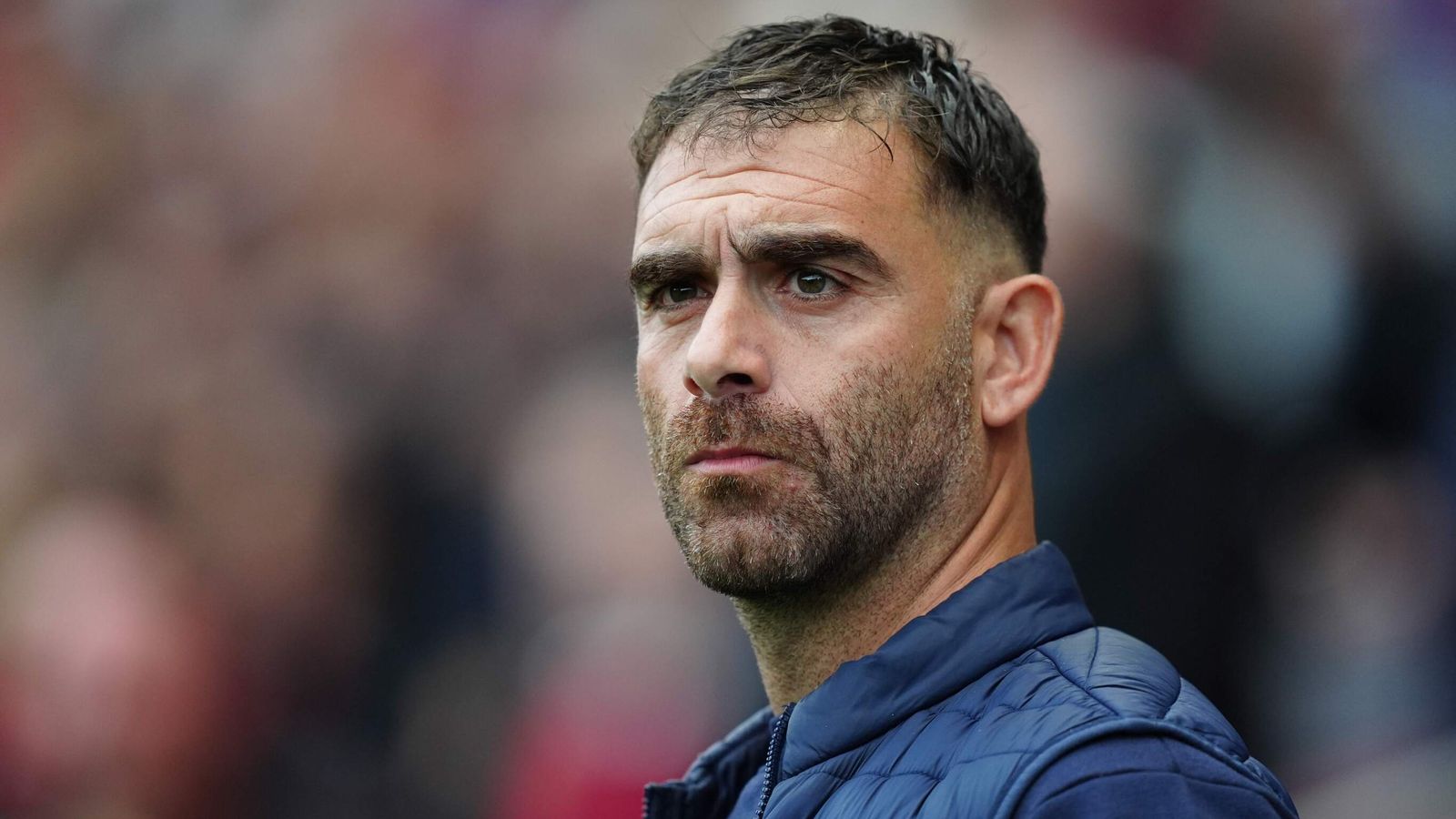
Omar Riza says: “It broadened my worldview again” Sky Sports. He is reflecting on his latest coaching role with Cesena in Italy, where he helped former England international Ashley Cole. But Rza’s experiences are already wide and colorful.
In one evening, the former Cardiff City boss talks about many of them. The highs and lows of managing in the Championship, how he once received a global ban from football and even broke his ankle in a charity match. “Senseless fight!”
As a player, he started at Arsenal, his association with Cole dates back to when they were boys. But his league debut came on loan at Den Haag in the Netherlands and he later spent five years in Turkey, including playing European football for Trabzonspor.
As a coach, he worked with England’s age group teams and managed Cardiff City in the Championship. It was Cesena’s chance to get back on the turf. “Hungry to go again.” Now, after that adventure, he dreams of returning to the Football League.
“Italy was a good opportunity to work with Achely, whom I have known for a long time, and to experience a different style of football. At Cesena, the goal was to change the approach, to change the mentality, and we did that in a short time.”
Riza explains: “Italy are quite defensive, can set up low blocks and counter-attacks. They are very happy not to have the ball. Our mentality was to try to keep the ball, control the game, provoke the opposition to open spaces further up the pitch.
“The players were used to 5-3-2 and defending their own box, going to high pressure, closing in on the opposition, stopping them from playing and winning the pitch, causing them problems, it was a big change not only for the players but also for the fans.”
Cole decided to call time on the Cesena project in the summer after it became clear that the club’s ambitions did not match his own. “I believe we would have done very well this year if we had been allowed to bring in the players we wanted,” says Riza.
But he is rooting for his old friend to succeed elsewhere. “He’s worked hard in his coaching, he’s diligent and he’s got his head down.” Helping him in the next role is an option. “We talked about it.” But Rza’s real goal is to become the head coach again.
He got his first taste at Leyton Orient in 2017. It was not a subtle presentation. “There were five management changes that season. The owners weren’t paying the players and the fans were on hand. It was really tough.” But he saw the season.
Now 46, there have been many obstacles since then. “After that I applied for hundreds of jobs and finally I got a job at Watford. I started working part-time for £20 an hour and worked my way up to being an under-15s first-team assistant. And then I got sacked.”
The other one is still inciting. It was a “slap in the back” to discover that his future was tied solely to head coach Valerien Ismael, who was brought in that summer. “I was there for five years, a Pro License coach.” But Rza had to start again.
At Cardiff, in the autumn of 2024, he was entrusted with the top job after Erol Bulut was sacked for taking one point from the first six games of the season. The turnaround under Rza was quick and effective enough to make the job permanent.
“I was named manager of the month,” he recalls. The first of two such nominations in five months. “To take over after a start like that, it’s like you’ve been stripped of points. You’re trying to survive. We almost did.” Unfortunately, a hole in the spring saw him sacked with three games to go, just one point from safety.
“It became difficult to play freely and we played 15 games, a lot of draws.” Cardiff haven’t won in three games since his departure and finished bottom of the Championship despite finishing 19th in his 37-game spell in charge.
Saturday, October 17 at 11:30am
It starts at 12:30 p.m


There are good memories. 5-0 win over Plymouth. Wayne Rooney was in charge at the time.” Two draws with Coventry. “I faced Frank Lampard, who I played with at West Ham. But the derby win over Swansea remains bittersweet.
“I lost my father that week.”
This is the unseen side of the game. “I’d go up and down the highway because, ‘It’s your dad, you’ve got to come back.’ I’d go and sit with my dad until two or three in the morning, and then I’d have to get ready for practice in the morning.”
It could be a three-hour drive. “It was a very emotional time, but I just love what I do and my dad would have wanted me to continue. It was difficult, but I knew that.” Cardiff beat Swansea 3-0 that weekend. “It was special to get this result for the fans.”
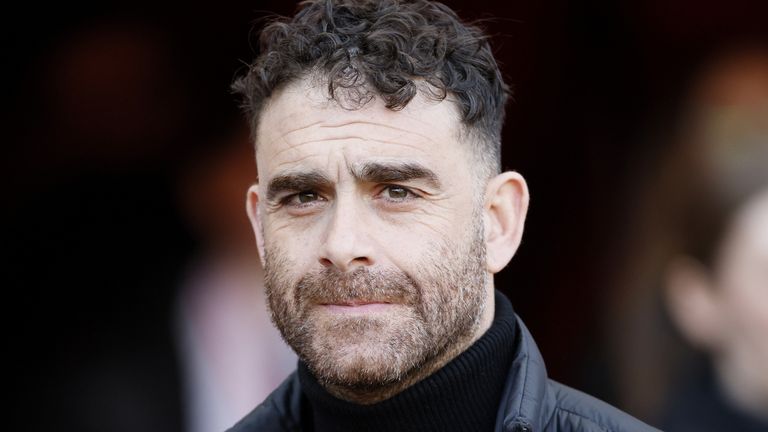
Omar Riza coached “Cardiff City” in 37 Championship games in the 2024/25 season.
He has a sense of pride in the players he helped develop. “Yousef Salech is doing very well now. Will Alves and Sivert Mannsverk did well when they came on.” But he admits that mistakes are made. Calling out fans for their criticism is unfortunate.
“It’s not just about what you do on the grass,” notes Reza. “You represent a football club. It’s very important. I learned a lot from the experience, massively. But then, now I’ve had very different experiences, both as a player and as a coach.”
How did these experiences shape his views on the game? Coached by the great Don Howe at Arsenal as a youngster, he was often regarded as a visionary. “He was very good at identifying exactly what you have as a player and developing it.”
He had a season training with the first team at Arsenal, working closely with Arsene Wenger. The head of the gunners did not say much, but every bit of information was absorbed. “When you get one little momentary detail, it can go a little deeper.”
He increased his knowledge in Turkey. “I remember our guards moving to midfield.” This was years before Pep Guardiola popularized the tactic. The past seasons with “Trabzonspor” brought the best and worst moments of his career.
“It was remarkable to play in Europe.” There is a picture of him in a top celebrating his UEFA Cup goal. “As a Turkish Cypriot, scoring against APOEL, a Greek-Cypriot side, was truly a fairytale.” But his time at “Trabzonspor” ended badly.
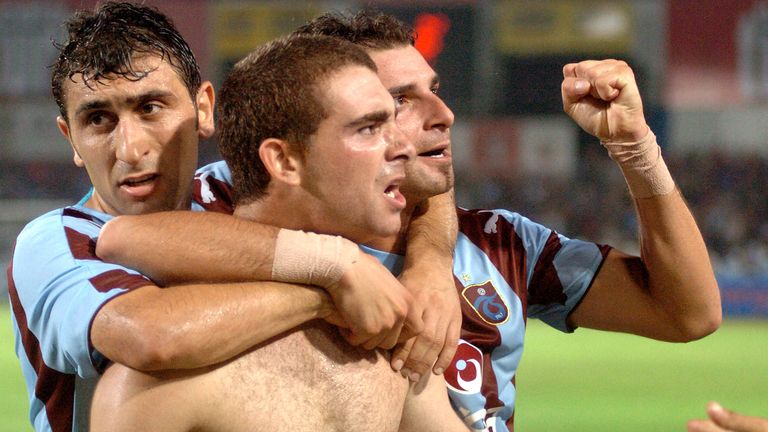
“Trabzonspor” player Omer Riza celebrates winning against APOEL in the UEFA Cup match.
“I ended up with a five-month ban. I left because they didn’t pay me, but the Turkish Federation found me guilty. I fought for ten years in the courts, CAS, FIFA, the European Court of Human Rights. I won the case, but I didn’t win the financial compensation.”
The experience took a toll on his career and finances. “I spent a lot of money to get it, but I helped other people along the way. They had to change the rules. It was a long and painful process and my dad and my whole family had to go through it.”
After that, his football career was never the same. “Nobody would sign me because the ban would kick in.” He was playing at the bottom of the pyramid. “That’s how it opened up.” But he was thinking of working in another industry, away from the game he loved.
“In my mind, I was getting ready to quit football. I remember telling my dad I didn’t want to do it anymore. But he reminded me that I’ve been doing this since I was six years old, traveling all over the world, so I should try to stay in football. It just progressed from there.”
Inspired by his father and perhaps driven by a playing career that didn’t quite live up to his promise, Rza continues to look for the next opportunity. “All this made me stronger, stronger,” he explains. “I’m ready for the next chapter.”