College football has many problems; however, some have plagued the sport long before the new playoffs or NIL. Stop me if you’ve heard this one before: the media is overhyping the SEC. Yes, the conference is having a better season than in previous years, but I still believe they will reap the benefits that no other conference has, especially the Big Ten.
One of the biggest challenges for the Big Ten is that they have struggled to build the cohesion that the SEC has fostered. While I always find it odd that fans of certain SEC schools cheer for their rivals in favor of the conference, I think it goes deeper than that.
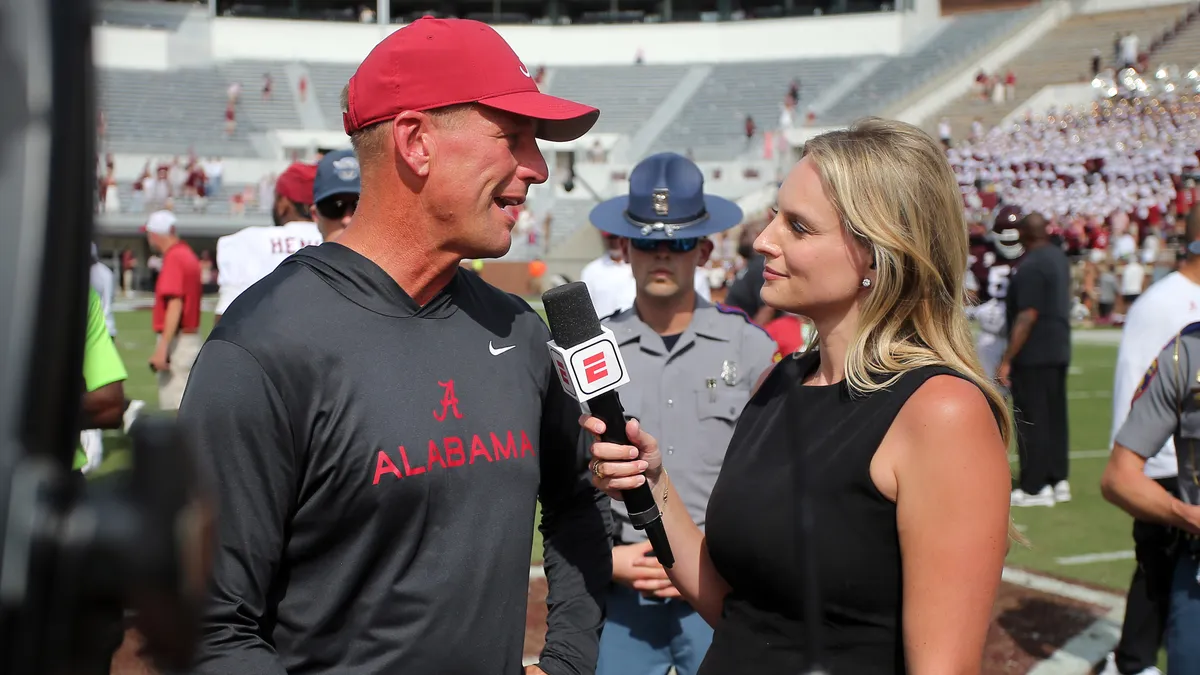
ESPN’s partnership with the SEC is the most successful pairing in sports. When you turn on ABC in the afternoon, you can watch elite SEC games from the start of the day until the end of college football. You never have to flip channels to find the best game in the conference; it’s almost always on ABC.
Now let’s take a look at the Big Ten. The Big Noon Kickoff almost always forces you to watch which opponent Ohio State is playing, whether it’s a fun game against Indiana or a joke against Kent State. Then you switch to CBS for the 3:30 slate and this game was incredibly hit or miss for the conference; By the time the 8:00 slate rolls around, you’ll be lucky to find a decent Big Ten game, and it’ll likely be outside of the basic cable package on FS1.
The SEC makes watching marquee games as simple as possible, while the Big Ten only makes it easier to watch Ohio State, and the TV ratings show it. Although the Buckeyes are their breadwinner, that’s not how you build overall conference depth, which is why you see so many SEC teams ranked.
AP voters are not smart. They don’t watch every team in college football; I’d venture that most voters couldn’t tell you who the starting quarterback was on a 5-0 Nebraska team because they weren’t ranked. The AP poll is incredibly reactionary and voters only remember what happened on Saturday.
Let’s look at some current ratings in the SEC that make zero sense. Florida got crushed this week, so they dropped 8 spots to 16th, behind Missouri, who beat them. But now, despite having the same number of losses as Ole Miss, Florida is NINE points behind them in the rankings, even though they ranked 24th just a week ago. Missouri took a big jump with the win and is now three spots above Mississippi State, a team they lost at home a week ago!
The SEC is a self-fulfilling cycle that never ends. A team gets overrated and loses a big game, but doesn’t get relegated. This team beats another overrated SEC school, then dunks them in the rankings, and everyone is firmly in the top 25.
Now let’s compare that to the Big Ten. Iowa lost to a big Ohio State team 31-14. They fell six places in the poll. Mississippi State dropped one spot with a home loss to a great Alabama team. You get penalized for losing in the Big Ten, but not in the SEC. Heck, USC won a tough game against a Washington team that would probably win 8 games and they still fell in the polls!
Finally, imagine not being ranked in the top 25 at 5-0 SEC. While I don’t think Nebraska has been that impressive, they are undefeated. They are currently ranked 31st in the AP poll, and you never see that in the SEC.
When you win in the South, you’re in contention for national titles; when the same teams lose, it just means they lost to another opponent. When a Big Ten team loses, it basically kills their season, and something has to change about that, and I feel like the TV Networks are getting back into the game.
These networks are not there to promote college football; they are ready to push the conference. ESPN is there for the SEC and FOX is there for the Big Ten. When they join Big Noon Kickoff or College Gameday, they’ve become monstrous publicity machines for the networks pushing the conference they’re affiliated with, ignoring the monstrous personas they use to talk about sports.
At some point, college football needs to break away from the one-network-per-conference contracts, and I think that will go a long way to save the sport. Much like our current political climate, college football is generally about “what’s best for your team,” not what’s best for the sport.