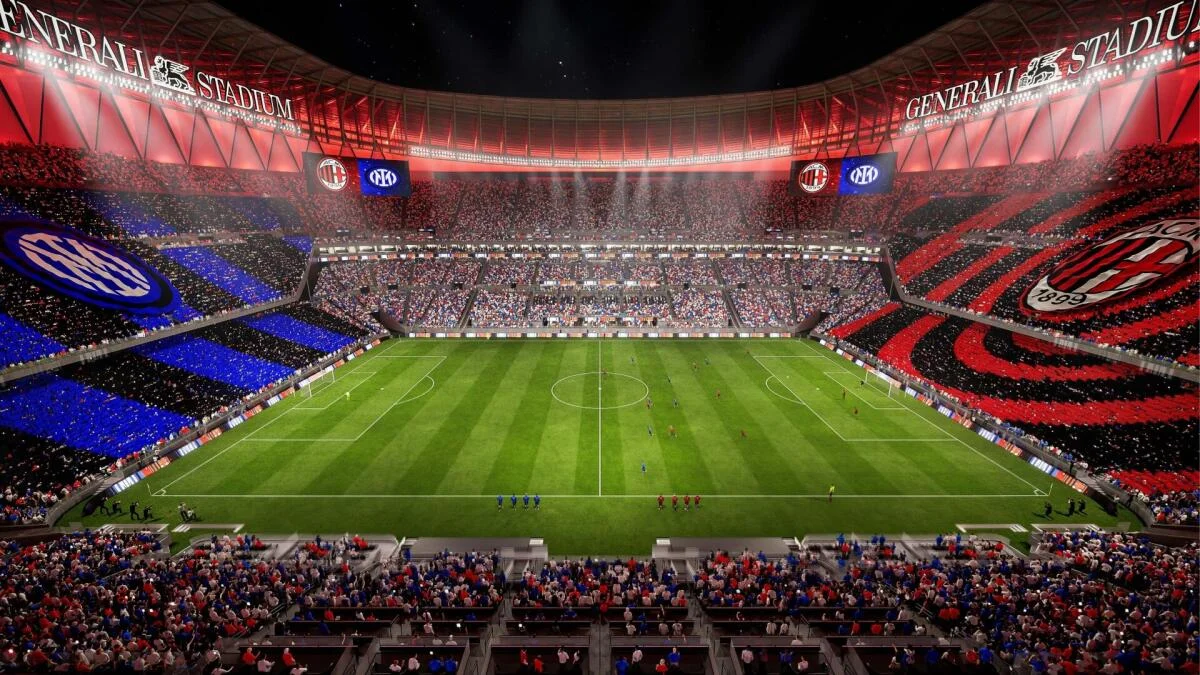
It was a historic day for Inter and Milan AC Milan finally, they announced plans for a new stadium to replace the San Siro, the current arena where both teams play their home games. The new San Siro will be called “Generali Stadium” after Italian insurance company Generali acquired the naming rights to the stadium in a deal worth 650 million euros ($725 million) over 20 years, according to multiple reports. The Generali Stadium will be ready by the 2031-2032 season, according to the two clubs, in time for UEFA Euro 2032, which will be co-hosted by Italy and Turkey, with construction set to begin in 2028. The current San Siro will be demolished only after the new stadium is ready for use. It was built in 1926.
San Siro celebrates 100 years: The iconic AC Milan and Inter stadium lives out its final years as it honors its history
Francesco Porzio
Now on to the details of the new arena: According to a joint news release from both clubs, it will be a “71,500-seat stadium designed around one of soccer’s most iconic atmospheres and setting a new standard for the live fan experience.” Foster + Partners and MANICA’s bold architectural vision brings together two architects, Lord Norman Foster and David Manica, who previously worked on the design of London’s Wembley Stadium. The new arena will feature a striking X-frame structure and a vast double curved roof, designed to be Milan’s next icon. A “definite investment” by RedBird and Oaktree, owners of AC Milan and Inter, to “strengthen sporting competitiveness, unlock future growth and help shape the next era of Italian football”.
Two seating tiers form a continuous 360-degree bowl, creating exceptional sight lines and an immersive connection between fans and the pitch. On either side, the iconic curvas rise as single, steep retaining walls, extending towards the playing area with seating inclinations of up to 37 degrees to enhance both atmosphere and visual effect. At the heart of the design is a striking structural form, its powerful rhythm evoking both the heritage of Italian engineering and the intricate craftsmanship of the Duomo di Milano.
Courtesy of Inter and Milan
Engineered to capture and amplify the energy of the crowd, the stadium’s acoustic design ensures supporters are at the heart of the spectacle and helps create the most atmospheric environment in world football. Enhanced accessibility, modern hospitality concepts and a wide range of seating options, from world-class premium experiences to popular seating areas, will ensure the venue welcomes every generation of fan, while offering new ways to experience the game.
The two teams will continue to share a home stadium, a unique tradition that began in the late 1940s when Inter also moved to the San Siro. Unlike most teams in the world of football, Inter and Milan have decided to continue sharing their stadium after leaving the current arena. After years of failed projects and attempts, the new stadium is now a concrete reality. In 2025, the Milan City Council approved the sale of the city’s San Siro stadium to two clubs, Inter Milan and AC Milan. Now the two Italian teams have decided to move in a new direction and era.
Courtesy of Inter and Milan
With Italian football facing an infrastructural crisis, the Generali Stadium could dramatically increase match revenue for both Inter and AC Milan, bringing them up to par with their European rivals. At the same time, it will be difficult to see teams leaving the legendary San Siro.
San Siro has been home to AC Milan and Inter Milan, but its history extends far beyond football. The iconic stadium has hosted some of the most memorable sporting and cultural events, including the opening ceremony of the 2026 Winter Olympics and legendary concerts by some of music’s biggest names. From Bob Marley’s first concert at San Siro in 1980, to the unforgettable shows of the Rolling Stones, David Bowie, Michael Jackson, Madonna, Taylor Swift, U2 or Bruce Springsteen, who famously described San Siro as their second home, the stadium has become a sports world far away. Now a new era will begin, but the “old” San Siro will not be forgotten.